
News

Measles outbreak: Your questions answered
Measles outbreak: Your questions answered

Measles outbreaks are rising across England, with areas including the West Midlands seeing their highest number of cases since the 1990s.
It has prompted health officials to encourage people to get vaccinated, with official figures showing uptake of the measles, mumps and rubella (MMR) vaccine is at its lowest point in more than a decade.
Here the BBC answers some of the questions people have been searching for.
What is measles?
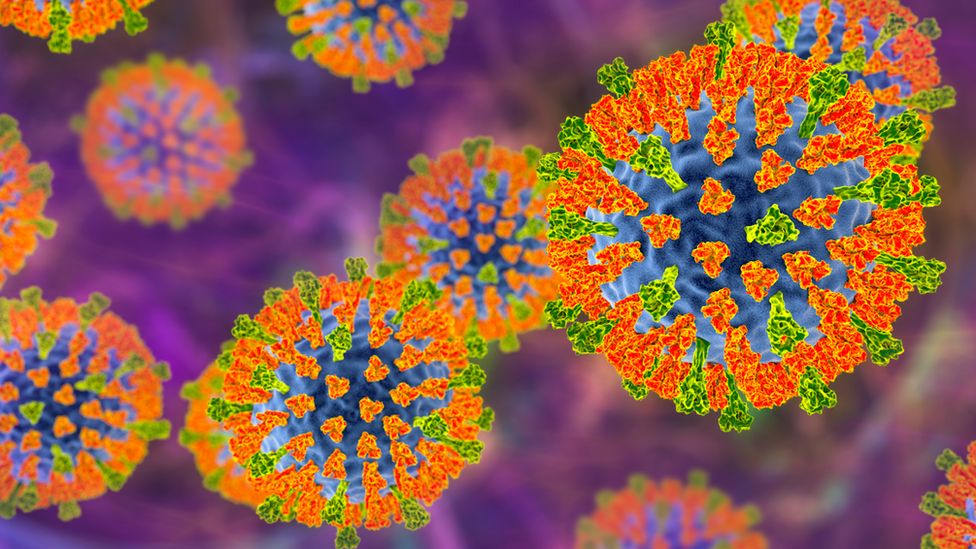
Measles is a highly contagious disease which is spread by coughs and sneezes.
In most cases it can be unpleasant, but will usually pass between seven and 10 days without causing any further problems.
However, it can lead to serious problems for some if it spreads to other parts of the body, such as the lungs or brain.
It can cause serious problems such as pneumonia, meningitis, blindness, and fits, with certain groups such as babies and small children, pregnant women and those with a weakened immune system more at risk.
It can cause death, but this is rare. Government figures from 2022 show since 2000, there were eight deaths in children or adults that could have been prevented by having the vaccine.
What are the symptoms?
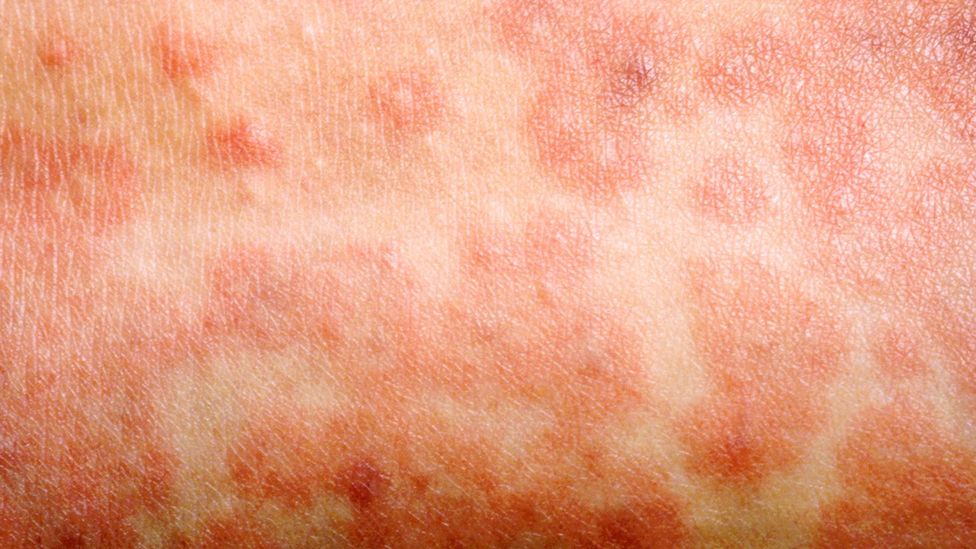
High fever, sore, red and watery eyes, coughing, sneezing, aching and feeling generally unwell are all common signs of measles. A blotchy red/brown rash usually appears after the initial symptoms.
People with measles remain infectious until at least four days after the onset of the rash, so they should stay away from nursery, school, university, work and other group activities until then.
NHS
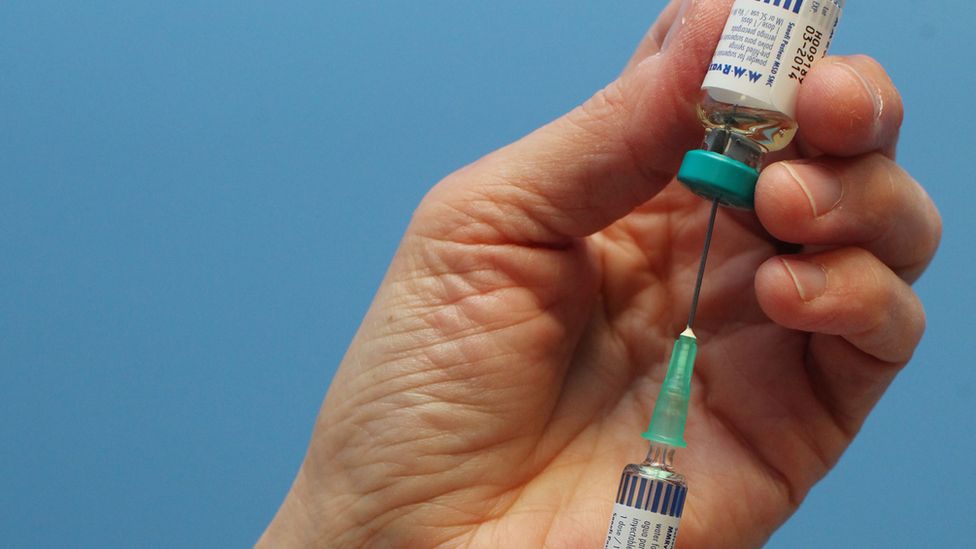
The NHS says the best way to prevent measles is by getting both doses of the MMR vaccine.
For people who do not consume pork products, there is a version of the vaccine called Priorix which has no pork ingredients which can be requested from a GP.
How is measles spread?
The virus is contained in tiny droplets that come from the nose and mouth when an infected person coughs or sneezes.
Measles is caught by breathing these in or touching the droplets and then placing your hand near your nose or mouth.
The virus can survive on surfaces for a few hours.
People with measles become infectious from when the symptoms develop until about four days after the rash first appears.
Ruth Tennant, the director of public health for Solihull, in the West Midlands, said: "I think we'd forgotten quite how infectious and nasty measles can be."
Why is there an outbreak now?
It is unclear where the current outbreak originated, but official figures show uptake of the MMR vaccine is at its lowest point in more than a decade.
In 2022/23, some 84.5% of youngsters in England had received both doses of the jab by the time they were five years old - the lowest level since 2010/11.
GETTY IMAGES
Up to 92.5% had received one dose, the figures show.
Where are the worst affected areas?
The majority of measles cases in the West Midlands - 80% - have been found in Birmingham, while 8% were identified in Coventry, with the rest spread across surrounding areas.
Ms Tennant said since the beginning of October, there had been more than 250 confirmed cases in the region and numbers had picked up since Christmas.
Letters have been sent to all schools in Birmingham to warn parents if their child is not immunised from measles they could be made to isolate for three weeks, if exposed.
Pop-up vaccination clinics have been set up in the Black Country to help ensure children aged 12 to 16 are up to date with their MMR jab.
How do I protect myself and my family?
John Denley, Wolverhampton's director of public health, said: "The best way to prevent measles in the first place is by getting both doses of the MMR vaccine, which is both safe and effective."
The two-part MMR vaccine is given as part of the childhood vaccination programme.
However, patients can be vaccinated at any age if they have not been fully vaccinated before.
GETTY IMAGES
There is an alternative for those not suited to the MMR vaccine, called human normal immunoglobulin (HNIG). This can be used at for people at risk of catching measles.
People who develop the symptoms of measles are advised to stay at home and phone their GP or call the NHS on 111 for advice.
Those with symptoms are asked not to visit their GP surgery or hospital because of the risk of passing it on.
